
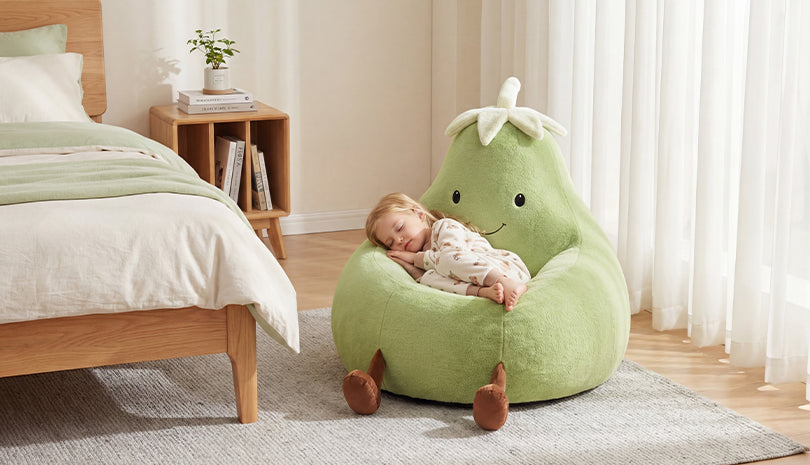
Picking out furniture for your child's room can feel like solving a puzzle. You want something they'll love, something that fits their space, and ideally, something that'll last more than a few months before they outgrow it. When it comes to bean bag chairs, size matters more than you might think.
The right-sized bean bag can transform a corner into a cozy reading nook or give your child their own special spot to unwind after school. But get the sizing wrong, and you might end up with a chair that's either too cramped for comfort or so oversized it takes over the entire room.
In this guide, we'll walk you through everything you need to consider when choosing a bean bag chair size—from your child's current age and height to the layout of their room. By the end, you'll have a clear idea of which size will work best for your family.
Understanding Bean Bag Chair Sizes
Before we dive into age recommendations, let's get familiar with how bean bag chairs are typically sized.
Common Size Categories
Most bean bag chairs fall into a few standard categories:
- Small: Often around 24-28 inches in diameter, these compact options work well for toddlers and tight spaces
- Medium: Typically 30-36 inches across, offering a comfortable fit for elementary-aged children
- Large: Usually 38-42 inches in diameter, suitable for tweens, teens, and even adults
- Oversized: 48 inches and up, designed for lounging or sharing
How Measurements Work
Here's something that can be a bit confusing at first: bean bag dimensions are often listed as diameter and height when the bag is filled and settled. A 36-inch bean bag might measure 36 inches across and about 24-30 inches tall when someone's sitting in it.
The fill volume also plays a role. A bag with more fill will hold its shape better and sit taller, while one with less fill will conform more to your child's body and sit lower to the ground. Many quality bean bags allow you to adjust the fill over time, which can be helpful as your child grows.
Matching Size to Your Child's Age
Every child is different, but age can give you a helpful starting point when thinking about size.
Toddlers (Ages 2-4)
For your littlest ones, smaller tends to be better. A bean bag in the 24-28 inch range often works well for toddlers.
Why smaller works: At this age, your child is still developing coordination and balance. A smaller bean bag is easier for them to climb into and out of independently, which builds confidence. Plus, their shorter legs and smaller frames fit more comfortably in a compact chair.
Safety note: Look for bean bags with childproof zippers or closures. Curious toddlers shouldn't be able to access the fill material.
The lower profile of a small bean bag also means less distance to the floor if they tumble off, though bean bags are generally quite safe for this age group.
Young Children (Ages 5-8)
As kids enter elementary school, a medium-sized bean bag (around 30-36 inches) tends to hit the sweet spot.
Room to grow: At this stage, children are growing quickly. A medium size gives them comfortable seating now while leaving some room to grow into. You might get several years of use from a well-made medium bean bag.
Versatility matters: Kids this age use their bean bags for everything—reading, playing video games, watching shows, or just hanging out. A medium size supports all these activities without overwhelming their space.
Tweens (Ages 9-12)
This is when you might want to consider sizing up to a large bean bag (38-42 inches).
Growth spurts ahead: Many children experience significant growth during these years. A larger bean bag can accommodate their changing height and build more comfortably.
Longevity investment: If you're looking for a bean bag that'll last through the teen years, choosing a larger size now can make sense. A 10-year-old might look a bit small in a 42-inch bean bag at first, but they'll likely appreciate the extra room within a year or two.
Teens (Ages 13+)
For teenagers, adult-sized or large bean bags (42 inches and up) are often the way to go.
Adult proportions: By the teen years, many kids are approaching or have reached their adult height. They need the same amount of space and support as an adult would.
Social considerations: Teens often use their rooms as hangout spaces. A larger bean bag can accommodate them comfortably when friends are over, or provide a spacious spot for solo relaxation.
Dorm-ready: If you're thinking ahead to college, a quality large bean bag can transition with them to a dorm room or first apartment.
Room Size and Layout Considerations
Your child's age is just one piece of the puzzle. The size and layout of their room plays an equally important role.
Small Rooms (Under 100 Square Feet)
Working with a compact space? You're not alone. Many children's bedrooms fall into this category.
Size recommendations: In a smaller room, a small to medium bean bag (24-36 inches) often works best. This leaves enough floor space for other activities and doesn't make the room feel cramped.
Placement strategies: Consider tucking the bean bag into a corner when not in use, or choosing a spot near a window to create a defined reading area. In tight quarters, every inch counts.
Multi-functional thinking: In a small room, furniture needs to earn its keep. A bean bag that can serve as both seating and a floor cushion for playtime offers good value for the space it occupies.
Medium Rooms (100-150 Square Feet)
With a bit more breathing room, you have more flexibility.
Optimal sizing: Medium to large bean bags (30-42 inches) can work well here. You have enough space to accommodate a comfortable chair without sacrificing too much floor area.
Creating zones: A medium-sized room gives you the opportunity to create distinct areas—a sleeping zone, a study corner, and a relaxation spot with the bean bag. This helps the room feel organized and purposeful.
Balance with other furniture: Think about how the bean bag will sit alongside the bed, desk, and storage. You want visual harmony, not a jumble of mismatched pieces.
Large Rooms (150+ Square Feet)
Lucky enough to have a spacious room? You can really have some fun with sizing.
Go bigger if you like: Oversized bean bags (48 inches and up) can work beautifully in a large room. They create a statement piece and a truly luxurious lounging experience.
Activity areas: In a bigger space, you might even consider multiple bean bags to create a hangout zone or reading corner. This works especially well if siblings share the room.
Avoiding the empty look: Interestingly, in a very large room, a bean bag that's too small can get lost and make the space feel sparse. Sometimes sizing up helps the room feel more furnished and cozy.
Measuring Your Space
Here's where we get practical. Before you commit to a size, it's worth taking a few measurements.
Start with the floor space: Measure the area where you're thinking of placing the bean bag. Remember that bean bags spread out a bit when someone sits in them, so account for the "footprint" being slightly larger than the stated diameter.
Check your clearances: Make sure there's enough room to walk around the bean bag comfortably. A good rule of thumb is to leave at least 24-30 inches of clearance for pathways.
Don't forget the door: This might sound obvious, but measure your doorways and hallways. You need to be able to get the bean bag into the room. Most bean bags are somewhat flexible and can squeeze through standard doorways, but oversized models might be trickier.
Think vertically too: While bean bags sit low, consider the ceiling height and overall proportions of the room. In a room with low ceilings, a very large bean bag might feel out of scale.
Visualize it: Here's a helpful trick—use painter's tape to mark out the footprint of the bean bag size you're considering on the floor. Live with it for a day or two. Does it feel right? Can you move around comfortably? This simple step can save you from sizing regrets.
Growth and Longevity Planning
One of the trickiest parts of buying kids' furniture is that kids don't stay the same size for long.
The "buy for now vs. later" dilemma: There's no perfect answer here, and it often comes down to your priorities and budget. Buying a bean bag that fits your child perfectly right now means maximum comfort in the short term. Sizing up means they'll grow into it and you'll get more years of use.
A middle-ground approach: Many parents find that choosing one size up from what seems "perfect" right now offers a good balance. A 6-year-old might do fine in a medium bean bag even if a small would fit them perfectly today. They'll still be comfortable, and the chair will last them several more years.
Refillable options: Some bean bags allow you to add or remove fill. This can be a game-changer for longevity. You can start with less fill for a younger child and add more as they grow, adjusting the firmness and height to suit their changing needs.
Cost per year: If you're weighing options, think about cost per year of use. A higher-quality, larger bean bag that lasts five years might offer better value than a cheaper, smaller one that needs replacing in two years.
Special Considerations
Every family's situation is unique. Here are some scenarios that might affect your sizing decision.
Multiple Children
If you have siblings who'll be sharing a bean bag, sizing becomes a bit more complex.
Age gaps matter: If your kids are close in age, you can usually pick a size that works for both. If there's a bigger age gap—say a 4-year-old and a 10-year-old—you might need to size for the older child or consider getting two different sizes.
Shared vs. individual: Some families opt for one larger bean bag that both kids can use (or even sit on together for movie time). Others prefer individual smaller bean bags so each child has their own space. Both approaches can work—it depends on your space and budget.
Special Needs
If your child has sensory sensitivities, mobility considerations, or other special needs, sizing takes on additional importance.
Sensory considerations: Some children find deep pressure calming. A bean bag that they can really sink into might be more soothing than a firmer, smaller option. Others might prefer a smaller, more contained space.
Mobility factors: If your child uses mobility aids or has difficulty with transfers, consider the height and firmness of the bean bag. Some children find it easier to get in and out of a slightly firmer, higher bean bag, while others do better with a lower profile.
Therapeutic input: If your child works with an occupational therapist or other specialist, it might be worth asking for their input on sizing and firmness.
Room Function
How your child uses their room can influence the ideal bean bag size.
Bedroom vs. playroom: A bean bag in a bedroom might be used primarily for reading or quiet time, while one in a playroom might see more active use. Think about the primary activities when choosing a size.
Study station: If the bean bag will be used for homework, make sure it's sized to provide good support. Some kids find it hard to focus in a bean bag that's too large and loungy—they sink in and get sleepy. A medium, slightly firmer option might work better for studying.
Media setup: For gaming or watching shows, a larger bean bag often provides better comfort for extended sitting sessions.
Testing and Visualization Tips
Whenever possible, it helps to get a sense of the size before you buy.
The tape trick: We mentioned this earlier, but it's worth repeating. Painter's tape on the floor is your friend. Mark out the dimensions and see how it feels in the space.
Cardboard mockup: If you're really unsure, you can create a rough mockup using cardboard boxes. It doesn't need to be perfect—just something to give you a three-dimensional sense of the size.
Online room planners: Several websites and apps let you create a floor plan and place furniture virtually. This can help you visualize how a bean bag will fit with the rest of the room.
In-store testing: If you have the opportunity to visit a store that carries bean bags, bring your child along. Let them try different sizes. Pay attention to how easily they can get in and out, and whether they look comfortable.
Return policies: Check the return policy before purchasing. Some retailers offer exchanges if the size doesn't work out. This can give you peace of mind to try a size you're not 100% certain about.
Common Sizing Mistakes to Avoid
Let's talk about some pitfalls that trip people up.
Buying too small: It's easy to underestimate how quickly kids grow. A bean bag that fits perfectly today might be outgrown in a year. Unless you're specifically buying for a toddler and plan to replace it soon, consider sizing up slightly.
Buying too large: On the flip side, a bean bag that's too big can overwhelm a small room and might not be comfortable for a younger child. Balance longevity with current usability.
Ignoring ceiling height: In rooms with lower ceilings or sloped ceilings, a very large bean bag can make the space feel cramped. Consider the room's proportions, not just the floor space.
Forgetting about doorways: Measure your doorways, especially if you're considering an oversized bean bag. Some can be compressed to fit through, but it's worth checking dimensions first.
Not accounting for settling: Bean bag fill compresses over time with use. A bag that seems perfectly full when new might settle and sit lower after a few months. Quality bean bags can be refilled, but it's something to keep in mind.
Quick Reference Guide
Here's a handy summary to help you make your decision:
Size Chart by Age:
- Ages 2-4: Small (24-28 inches) - Easy to navigate, safe height, appropriate proportions
- Ages 5-8: Medium (30-36 inches) - Room to grow, versatile for various activities
- Ages 9-12: Large (38-42 inches) - Accommodates growth spurts, long-term investment
- Ages 13+: Large to Oversized (42+ inches) - Adult-sized comfort, dorm-ready
Room Size Guide:
- Under 100 sq ft: Small to Medium (24-36 inches)
- 100-150 sq ft: Medium to Large (30-42 inches)
- 150+ sq ft: Large to Oversized (38-48+ inches)
Pre-Purchase Checklist:
- ✓ Measured the intended floor space
- ✓ Checked doorway and hallway widths
- ✓ Considered child's current age and projected growth
- ✓ Thought about primary use (reading, gaming, studying, relaxing)
- ✓ Visualized the size using tape or mockup
- ✓ Reviewed return/exchange policy
- ✓ Checked if the bean bag is refillable for future adjustments
Wrapping Up
Choosing the right size bean bag chair for your child doesn't have to be overwhelming. By considering your child's age, the size of their room, and how they'll use the chair, you can find an option that works beautifully for your family.
Remember, there's no single "perfect" size that works for everyone. A small bean bag might be ideal for one family's needs, while another family in a similar situation might be happier with a larger option. Trust your instincts, measure your space, and think about your priorities—whether that's maximizing longevity, optimizing comfort right now, or finding the best fit for your room layout.
The good news is that bean bag chairs are generally forgiving pieces of furniture. They're comfortable across a range of sizes, and kids tend to love them whether they're on the smaller or larger end of the spectrum.
Take your time, do your measurements, and you'll find a bean bag that becomes your child's favorite spot in the house.
Frequently Asked Questions
What size bean bag is best for a 5-year-old?
For most 5-year-olds, a medium bean bag in the 30-36 inch range tends to work well. This size is comfortable for them now and leaves room to grow. If your child is particularly tall or small for their age, you might adjust up or down accordingly.
How much space does a bean bag chair need?
As a general guideline, plan for the bean bag's diameter plus about 24-30 inches of clearance around it for comfortable movement. So a 36-inch bean bag would ideally have a footprint area of about 60-66 inches to allow for walking space.
Can a bean bag chair be too big for a room?
Yes, it's possible. In a small room (under 100 square feet), an oversized bean bag can make the space feel cramped and limit floor space for other activities. It's helpful to visualize the size using tape on the floor before purchasing.
Should I buy a bigger size for my child to grow into?
This can be a smart approach, especially for children in the 5-12 age range who are growing quickly. Choosing one size up from what fits perfectly now often provides a good balance between current comfort and longevity. Just make sure the larger size isn't so big that your child can't use it comfortably in the present.
How do I know if a bean bag will fit through my door?
Measure your doorway width (most standard doors are 30-36 inches wide). Bean bags are somewhat flexible and can often be compressed or angled to fit through doorways, but oversized models (48+ inches) might require some maneuvering. Check the product dimensions and compare them to your narrowest doorway or hallway.


